At 8 o’clock every day, CCTV will sort out the big and small things that happened around us within 24 hours.
[concern]
Pensions have risen 15 times! 118 million people benefited, and these categories of people rose even more.

On March 20th, the Ministry of Human Resources and Social Security and the Ministry of Finance jointly issued a notice to continue to uniformly adjust the basic pension for retirees of enterprises, institutions and institutions in 2019, with an overall increase of about 5%. It is estimated that 118 million retirees will benefit. According to the Ministry of Human Resources and Social Security, the adjustment ratio of "about 5%" is the overall per capita level. Generally speaking, the absolute amount of the basic pension will be relatively high for those who have a long payment period and a high payment wage.
[domestic]
The list of national health cities in 2018 is released. Is your hometown on the list?

The National Aiwei Office organized experts to review the national health cities (districts) that entered the review process in 2018, and conducted spot checks on the review results of national health counties (towns) reported by various places. Re-confirm 93 cities (districts) such as Huairou District of Beijing as national health cities (districts), and re-confirm 236 counties (towns) such as Ma Po Town of Shunyi District of Beijing as national health counties (towns).
The recruitment of civil servants in provincial examinations started, and 19 provinces planned to recruit more than 80,000 people.

In March, many provinces intensively started the recruitment of provincial civil service examinations in 2019. As of March 20, 19 provinces have issued recruitment notices for civil servants, with a total recruitment scale of over 80,000.
Gwan Chin was appointed Party Secretary of Beijing Film Academy, and Hou Guangming no longer served.
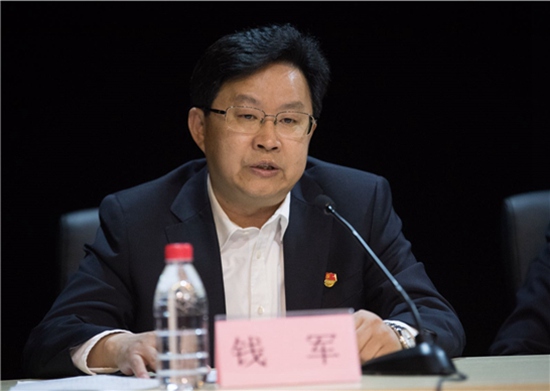
According to the official website of Beijing Film Academy, on March 20th, Beijing Film Academy held a meeting of cadres. Comrade Zhang Qiang, deputy director of the Organization Department of Beijing Municipal Committee, read out the decision of Beijing Municipal Committee. Gwan Chin was appointed as the Party Secretary of Beijing Film Academy, and Hou Guangming no longer served as the Party Secretary of Beijing Film Academy because he reached the age limit.
The number of victims of the "3.15" landslide in Shanxi rose to 19, and one lost contact.
At 18: 00 on March 20, Xiangning "3 15" landslide rescue headquarters held the fourth press conference to inform the progress of rescue. The circular pointed out that during the day on the 20th, the on-site search continued and another victim was found. Up to now, 19 people have been killed and one person is still missing. Emergency rescue is in progress.
Kunming police join hands with China Mobile to launch fraudulent call number prompt service.
On March 20, the launching ceremony of Kunming’s promotion meeting on preventing and cracking down on new illegal crimes in telecommunication networks and the anti-fraud calling number prompt service was held. From now on, Kunming Branch of China Mobile Yunnan Company will open this service to customers in the whole city free of charge. When customers answer or make a call, the mobile color printing platform will identify the calling number and remind them to raise their awareness of prevention.
Poyang Lake entered the fishing ban period.
From March 20th, Poyang Lake in Jiangxi entered a three-month fishing ban. Since 1987, China has implemented a fishing ban system in some waters of Poyang Lake; In 2002, Poyang Lake began to implement a lake-wide fishing ban system, and all fishing operations were prohibited during the fishing ban period from March 20 to June 20 every year.
[international]
Kazakhstan officially renamed its capital Nursultan to pay tribute to the former president.
Kazakhstan’s parliament passed a constitutional amendment on March 20th, renaming the capital Astana as Nursultan to pay tribute to Nursultan Nazarbayev, the first president of Kazakhstan who just stepped down as president.
The Fed is on hold: it is expected that it will not raise interest rates this year and increase it next year.

On March 20, local time in the United States, the Federal Reserve announced that it would not raise interest rates after the two-day meeting on interest rates in March, and maintained the federal funds rate at 2.25%-2.50%. The statement of this interest rate meeting implies that the Fed may stop raising interest rates completely this year, and stop shrinking its table at the end of September, and may raise interest rates once in 2020.
New Zealand police: When the gunman was arrested, he was heading to the third location to prepare for the attack.
According to New Zealand media reports, on the morning of 20th local time, New Zealand Police Chief Bush held a press conference to publicize the latest investigation progress of the shooting in Christchurch. He said that when the police captured the gunman, he was heading to the third location to prepare for the attack.
On the afternoon of 15th, gunmen made bloody cases in Nur Mosque and Linwood Mosque successively, which has caused 50 deaths and 50 injuries.
The families of the victims of the 24th anniversary of the Sarin incident in Tokyo Metro held a memorial service.

According to Japanese media reports, on the 20th, the Tokyo subway sarin incident celebrated its 24th anniversary. This is the first anniversary of the death of the victims after the original leader of Aum Shinrikyo in Japan who made the incident in July 2018 was executed. Survivors of the victims held a memorial service at Xiaguan Station of Tokyo subway.
On March 20, 1995, Aum Shinrikyo in Japan created a subway sarin incident, which spread poisonous nerve gas sarin in the carriages of several subways in Tokyo, killing 13 people and injuring about 6,300 people.
Italian woman forced her daughter to go on a diet to lose weight and was accused of abuse.
According to foreign media reports, a 47-year-old woman in Italy was accused of ill-treatment because she forced her daughter to lose weight too harshly. The Italian prosecutor ordered the woman to be banned from contact with her daughter. According to reports, the woman asked her 16-year-old daughter not to weigh more than 50 kilograms, even if she only increased by 0.1 kilograms, she would criticize and accuse her daughter.
South Korean artists suspected of soliciting pornography successfully postponed their application for enlistment and were approved.

On the 20th, the Korean Military Affairs Department approved the application for postponement of enlistment successfully submitted by former BIGBANG members suspected of providing pornographic entertainment to foreign investors. As a result, the winning enlistment time will be postponed to three months later.
Society
Shanghai online celebrity Wanderers is a civil servant of the Audit Bureau: since 1993, sick leave wages have been paid as usual.
Recently, the video of Shanghai tramps preaching to passers-by became popular, and many people deliberately went to watch and take pictures. At the same time, rumors about him are endless. On March 20, the staff of Xuhui District Audit Bureau responded that Shen Wei entered the work of Xuhui District Audit Bureau in 1986 and has been on leave due to illness since 1993. During this period, the Audit Bureau has been paying wages in full and on time.
Nearly 300 million people in China are troubled by insomnia.
Today is World Sleep Day. According to the latest data, nearly 40% of residents in China suffer from sleep disorders, and nearly 300 million of them are suffering from insomnia. At the same time, a survey shows that Chinese urban residents don’t sleep after 24 o’clock, and the reasons are in turn watching WeChat chat online, playing games, watching TV dramas, working overtime, socializing and gathering with friends.
A man in Shanghai jumped off the subway track to pick up his mobile phone without authorization, which delayed the 8 th train.
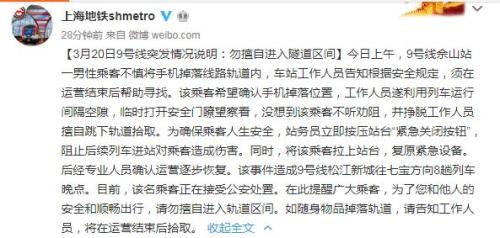
According to Weibo, the official news of the operation management department of Shanghai Shentong Metro Group, on the morning of 20th, a male passenger at Sheshan Station of Line 9 accidentally dropped his mobile phone into the track of the line, did not listen to dissuasion, and broke free from the staff to jump off the track to pick it up, resulting in the delay of No.8 train from Songjiang New Town to Qibao on Line 9.
The teacher thinks the classroom is noisy and makes the whole class slap themselves for dozens of times. The discipline inspection has intervened.
A few days ago, a primary school teacher in suyu district, Suqian City, asked the whole class to stand up and slap themselves for dozens of times because the children were noisy in music class. After the incident, it caused concern in the local area. On the 20th, the reporter learned from the Education Bureau of suyu district that the relevant discipline inspection departments have been involved in the investigation and will be punished fairly and publicly according to the results.
The collision between a bus and a truck in Gushi County, Henan Province has caused 4 deaths and 15 injuries.
On March 20, the reporter learned from the Information Office of Gushi County Government of Henan Province that a bus collided with a truck in the county that morning. At present, the accident has caused 4 deaths and 15 injuries. The injured were promptly sent to Gushi County Hospital of Traditional Chinese Medicine for treatment. The actual number of bus passengers is being clarified, the public security department is investigating the cause of the accident, and the aftermath is being carried out in an orderly manner.
Women who have a cold and drink like new juice "detoxify" their families or go to the United States to sue.
Lin Li (pseudonym), a 34-year-old Ruxin salesperson, became ill, drank Ruxin juice to "detoxify", refused to seek medical treatment, and eventually died. At 11: 00 a.m. on March 20th, Vice President of Marketing Department of Ruxin Company met Lin Li’s family in Beijing. Zhang Xiaoling, an attorney, said on behalf of the family members that the family members of the victims may go to the United States to sue Ruxin.
Shanghai police cracked a serious case of counterfeiting registered trademarks: the amount involved exceeded 100 million yuan.
On the 20th, the Shanghai police revealed that the police in Qingpu, Shanghai, cracked a serious case of counterfeiting registered trademarks, smashed the criminal gang of counterfeiting and selling fakes led by Wu Mou, and seized more than 4,000 counterfeit bags, clothes, shoes and accessories of well-known brands, involving more than 100 million yuan (RMB, the same below). Counterfeits involve many internationally renowned luxury brands and are sold all over China.
The last round of "Super Moon" appeared on the vernal equinox in 2019.

The Purple Mountain Observatory of China Academy of Sciences announced on the 20th that the third and last "Super Moon" in 2019 will appear on March 21st, the vernal equinox. Unfortunately, because a strong cold air came to join in the fun, China "bid farewell" to sunny days in a large area, and will also miss the last round of "Super Full Moon" this year.
[Sports]
Figure Skating World Championships Wenjing Sui/Cong Han Short Program Second Peng Cheng/Jin Yang Third

On March 20th, Beijing time, the 2019 World Figure Skating Championships kicked off in Japan. In the short program competition for two people, China’s famous Sui Wenjing/Han Cong scored 79.24 points with perfect performance, which was the highest score of this season, ranking second. Another pair of China players, Peng Cheng/Jin Yang, also played well and finished the whole program cleanly, ranking third.
[face]
[Lei Jun] Responding to the 1 billion gambling contract with Dong Mingzhu: Dong Mingzhu has contacted me.

On March 20th, Xiaomi held an offline performance briefing. After the performance meeting, when the Securities Times reporter asked about the 1 billion gambling with Dong Mingzhu five years ago, Lei Jun responded that he was still waiting for the Gree Electric Annual Report. When the Securities Times reporter pressed further, the forecast of Gree’s 2018 annual report had come out. Lei Jun said that he would wait for the official annual report to come out, and Dong Mingzhu had contacted him on his own initiative.
[Ren Yongtao] In order to avoid mass casualties and forced landing, the pilot sacrificed the instant exposure of driving before his death.

On March 12, a fighter plane of a certain naval unit broke down during the flight training. In order to avoid casualties on the ground, two pilots gave up the opportunity of parachuting and died unfortunately. The picture taken by Ren Yongtao, a naval hero, was exposed a few days ago, and the camera inadvertently captured Ren Yongtao’s "driving moment".
[Theresa May] The British Prime Minister will send a letter to the EU requesting a one-year extension of Brexit.

According to the European Network, citing the European News Agency, on the 20th local time, British Prime Minister Theresa May will send a letter to European Council President Tusk, hoping to delay Britain’s departure from the EU for one year from March 29th.
According to reports, the Prime Minister’s official residence at No.10 Downing Street pointed out that the Prime Minister’s extension letter is scheduled to be sent on the 20th. Theresa May’s spokesman said that the letter from the British government to the EU to postpone the Brexit will be sent soon.
[Steve Dixon] Trump nominated an unprecedented executive of Delta Air Lines as the director of the Federal Aviation Administration.

The crash of Egypt Air passenger plane shattered the myth of Boeing, a veteran aircraft manufacturing company. As the investigation went on, the fire fell on the Federal Aviation Administration (FAA). According to Bloomberg News, US President Trump nominated Steve Dixon, an unprecedented executive of Delta Air Lines, as the director of the Federal Aviation Administration (FAA) for a five-year term on the 19th. According to reports, Dixon still needs confirmation from the Senate before he can take over the FAA.
[Ferguson] The chewing gum chewed in the last battle was auctioned for 390,000 pounds.
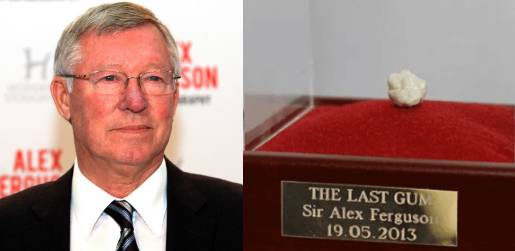
On March 20th, Beijing time, according to The Sun, the chewing gum chewed by the legendary Sir Alex Ferguson in the last battle of his coaching career was auctioned by fans for 390,000 pounds, and all the money was donated to the Manchester United Charity Foundation.
On May 19th, 2013, Manchester United won the Premier League title ahead of schedule. In the last battle of Sir Alex Ferguson’s coaching career, Manchester United drew 5-5 with West Brom away. On the same day, a fan happened to get the chewing gum that Ferguson chewed in this game. Fans put it on eBay and sold it at an incredible price.
See you at 8 o’clock tomorrow!
Editor: Xinyu Xiaoxiao Huang Zuochun